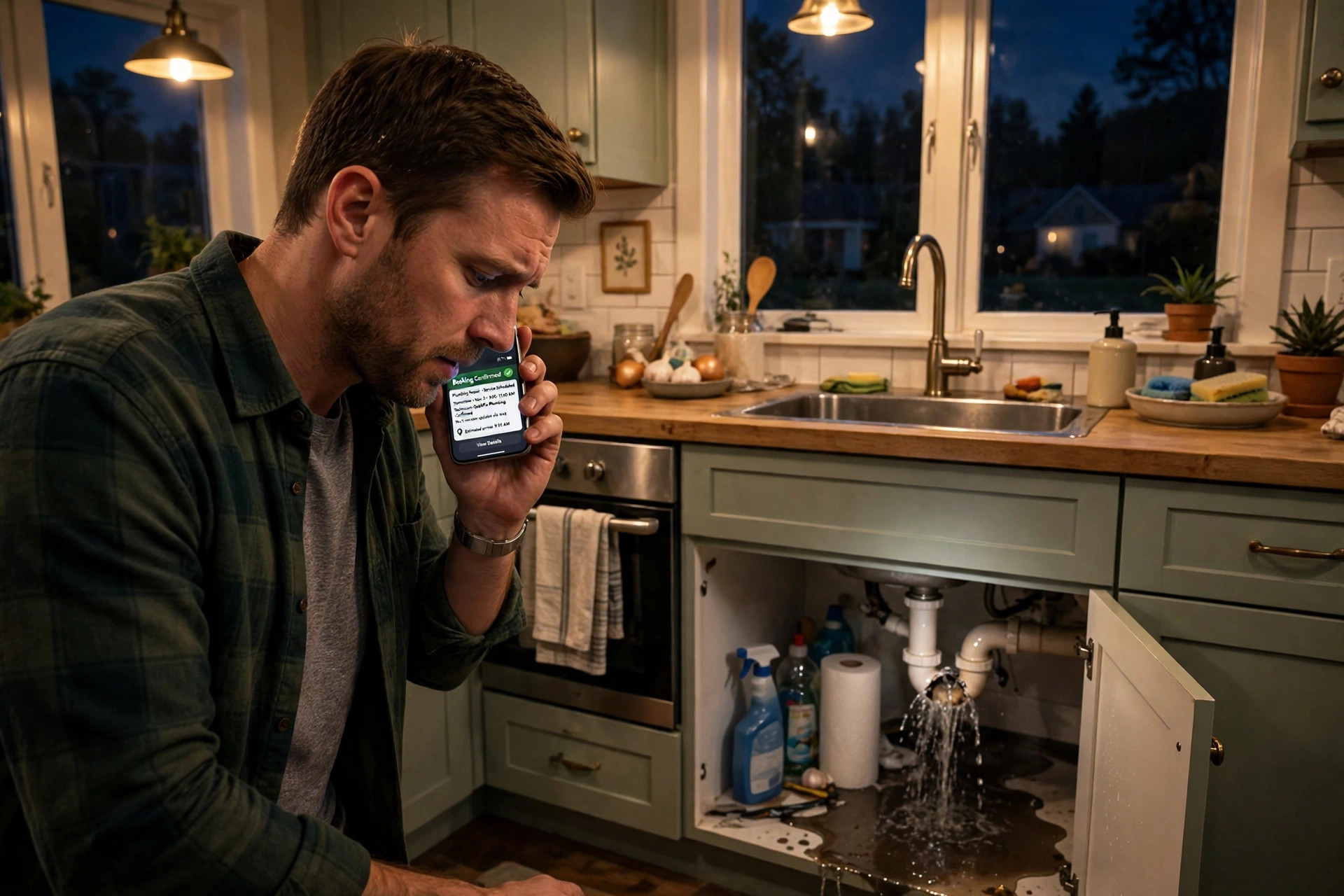
Your office closes at five. Your customers' problems do not. A pipe lets go at eight, a furnace quits at ten, a landlord finds a flooded unit on a Sunday morning — and in each case the call comes in while your sign says closed. That is exactly what after-hours booking is for: after-hours booking means the job gets answered, described, and put on your calendar at the hour it actually happens, not at the hour you happen to reopen. If nobody takes that call, the caller does not wait politely until morning. He calls the next company on the list.
The evening is when the decision is made
Homeowners have jobs too. All day they are at work, in traffic, or picking up kids — the leaking valve, the broken rail, the room that needs cleaning sits on a mental list. The evening is when they finally walk through the house, look at the problem, and start calling. That dinner-hour window is not leftover demand. For a lot of service businesses it is the main event: the caller is home, the problem is visible, and who gets the job is decided that night, by whoever answers that night.
The calls you never knew you missed
A closed office does not feel like it is losing work. There is no line out the door walking away, no customer hanging up in front of you — just a quiet phone you will check in the morning and a voicemail box that is usually emptier than the call log behind it. Those are the calls you never knew you missed: the rings that came in after close, got no answer, left no message, and never called again. Until you count them, you cannot answer the only question that matters here — how much are missed calls costing this business, in its own evenings and weekends, at its own prices?
What booking after hours actually looks like
It does not mean you personally stay on call all night, and it does not mean hiring a night desk. With Alice, the after-hours call is answered the same way the daytime call is: she asks what the job is, where it is, and how urgent it is, takes a photo from the customer when the job calls for one, and works from your own rates and your own service area — never from invented prices. If the job fits, she books a real window, sends the caller a confirmation right then, and leaves you a clear summary to wake up to: who called, what they need, and when they are expecting you. The customer goes to bed with a plan instead of a list of competitors, and you start the day with the work already on the board.
Weekends are not a smaller weekday
Saturday and Sunday carry their own work: moves that can only happen when people are off, cleanings before a Monday listing, repairs a tenant reports when she is home long enough to notice them. Treating the weekend like a paused weekday hands all of that to the one competitor whose phone is covered. After-hours cover lets a small shop act like it never closes without the owner living on his personal cell — the business answers, the family evening stays an evening, and the Monday board fills itself.
Start by counting what the dark hours cost
Before you change anything, run a missed call audit on your own business and look at the after-hours slice on its own. Count the calls that came in after close and on weekends last month, separate the ones that never left a message, and price them against the jobs you actually sell. Your numbers, not a national average somebody invented. For most owners the surprise is not one big emergency that got away — it is how many ordinary, bookable jobs slipped off, one quiet evening at a time. Run the audit, watch Alice answer and book live, and then decide: if those calls are already coming in, would covering them book more jobs than your voicemail does?