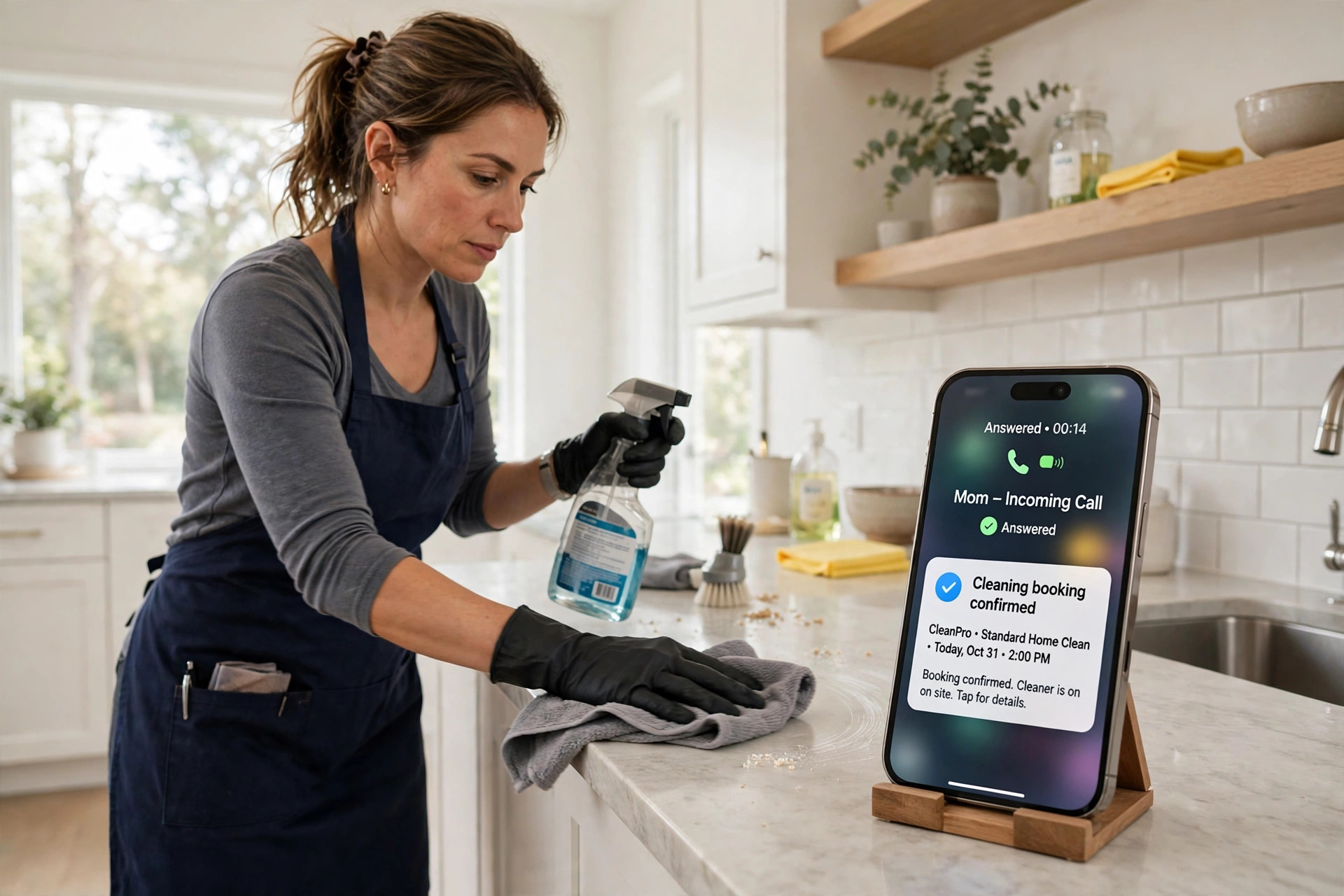
If you run a cleaning business, an AI receptionist for cleaners is not a nice extra — it's the difference between the next house getting booked and the next caller hiring the company that answered first. Cleaners don't sit by a phone. You're mid-clean with gloves on and a spray bottle in your hand, scrubbing a shower, carrying supplies up stairs, or driving to the next house on a tight route. The phone rings in exactly those moments, and a homeowner who needs a deep clean before guests arrive, a move-out clean this week, or a recurring biweekly slot isn't leaving a voicemail and waiting. She's calling the next cleaner on the list.
You are the crew and the office — at the same time
Most cleaning businesses are small by design: you, maybe a helper or two, and a route that only works if every stop stays on schedule. That means stopping to answer means stopping the clean — gloves off, hands washed, phone found — and by then the ring has usually ended. Every missed call isn't an inconvenience. It's a first clean that never happened, and often a recurring customer you never got the chance to earn. Cleaning is repeat business: the one-time caller who books easily today is the every-two-weeks house for the next two years. Lose the first call and you lose the whole run of jobs behind it. The work didn't go to a better cleaner. It went to the one who answered.
What she actually does: takes the details, quotes and books
Alice doesn't just take a name and promise a callback. Working as an AI that quotes jobs, she asks the questions a good cleaner would ask first: how many bedrooms and bathrooms, roughly how big the home is, whether it's a standard clean, a deep clean, or a move-in / move-out, whether pets are in the house, and when someone can be there to let the crew in. From your own rates, your minimums, and your service area, she gives the caller a clear next step and, when the job fits, puts it on your calendar and sends the confirmation right then. A one-time deep clean, a first recurring slot, or a move-out deadline — the caller hears a real booking, not a beep, and you finish the house you're in to find the next one already scheduled, with the address and the details attached.
After-hours booking is where the list gets made
After-hours booking matters even more for cleaners than for bigger shops. Evenings are when homeowners walk through their own kitchens, see what the week did to them, and decide to finally hire help — and when renters and landlords line up move-out cleans against a lease date that won't move. Those calls don't come at 10 AM while you're free to chat. They come at dinner, on Sunday, and the night before a walk-through. An AI receptionist for cleaners covers that window without asking you to hire an office or keep the phone in your apron on every job: the evening caller is answered, her home is described room by room, and a slot is booked before she calls anyone else.
Start with the missed call audit
Before you change anything, run a missed call audit on your own business. It counts the calls that rang out last month, separates the evenings and weekends, and prices them against your average clean — your numbers, not a national average somebody invented. For most cleaners the surprise isn't one big lost job; it's how many first cleans — and the recurring routes behind them — slipped away one unanswered ring at a time. Run the audit, watch Alice answer, quote and book live, and then decide the only question that matters here: would a front desk that answers while your gloves are on book more jobs for you than your voicemail does? If the audit says the calls are there, the answer is already on the page.