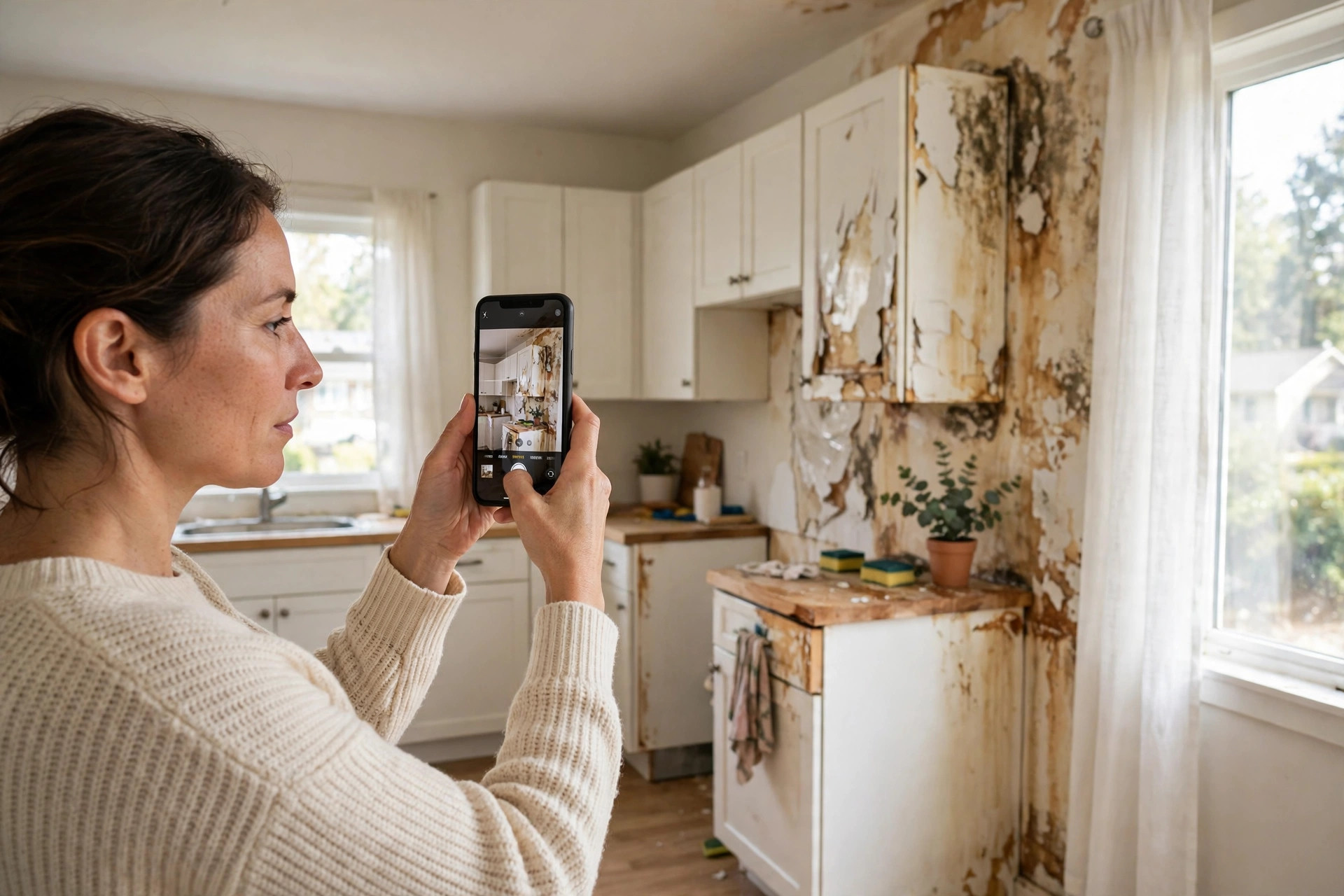
A photo estimate starts with the picture your customer already knows how to take. The faucet is leaking, the deck board is rotted, the wall is stained where the pipe let go — so they snap a photo and send it. The question is what happens next: does that picture sit in your texts until the weekend, or does it come back to them, fast, as a real itemized estimate they can say yes to?
The drive-across-town problem
The old way burns your most expensive hours first. A customer calls about a job you haven't seen, so you drive out just to look at it — forty minutes each way, fuel, and a hole in a day that was already full — before you can name a single number. Half the time the job is small, the budget isn't there, or the other company answered first. You paid for the look either way. An estimate from a photo doesn't replace a site visit on big work. It replaces the blind first trip on the work that never needed one.
How the AI estimator works
Vision 7, Alice's AI estimator, reads the photo the customer sends and does the intake you're doing in your head anyway. It identifies what's in frame — the fixture, the damage, the material, the access around it — then asks the follow-up questions a good estimator asks: How big is the area? When did this start? Is the water shut off? From those answers it assembles an itemized draft, line by line, so the customer sees what they're paying for instead of one mysterious total.
Your prices — never a guess
Here is the discipline that makes the draft trustworthy: it is priced only from your own rates. Work you have priced gets your price. Work you haven't priced is flagged for you and shown as priced on review — never guessed, never filled in with a number borrowed from the internet. You review and edit every line before anything saves or sends. The photo speeds up the quoting; it never takes the pricing out of your hands.
What one photo can tell you — and what it can't
One clear photo is honest about a lot: visible damage, the type of fixture or material, how tight the working space is, and whether this looks like a repair or a replacement conversation. It is not honest about what's behind the wall, under the floor, or out of frame — and a straight estimate says so. When the picture leaves the real question unanswered, the next step isn't a guess. It's a short walkthrough: a quote from a video lets the customer pan the room, open the cabinet, show the stairs and the shutoff, and give you the angles a single still can't.
Speed is the whole point
Customers don't experience your estimate as paperwork. They experience it as waiting. HubSpot Research found that 90% of customers rate an “immediate” response as important or very important when they have a question, and 60% define “immediate” as 10 minutes or less (Source: HubSpot Research consumer survey, published with HubSpot's State of Service research, 2019). A customer who sends a photo at lunch and gets an itemized draft back while the problem is still in front of them is comparing you to every company that still hasn't called back. That's the gap a photo estimate closes — first, fast, and in writing.
Put it on your page
On an Alice page, this is simply how quoting works: the customer sends the photo, Alice answers, asks the right questions, and drafts the estimate from your rates — while you're on a job, not in traffic on your way to look at one. Jobs that genuinely need your eyes in person still get a visit, now booked with a customer who already knows roughly what the work involves. The look is free. Your drive shouldn't be.