Searching for the cheapest ai receptionist is a reasonable thing for a small shop to do — answering the phone should not cost more than the jobs it brings in. But the cheapest headline is rarely the cheapest month. This edition compares totals instead of stickers: how many calls the price actually covers, how each call is counted, and whether the service books the job or only takes a message.
The allowance trap behind the lowest stickers
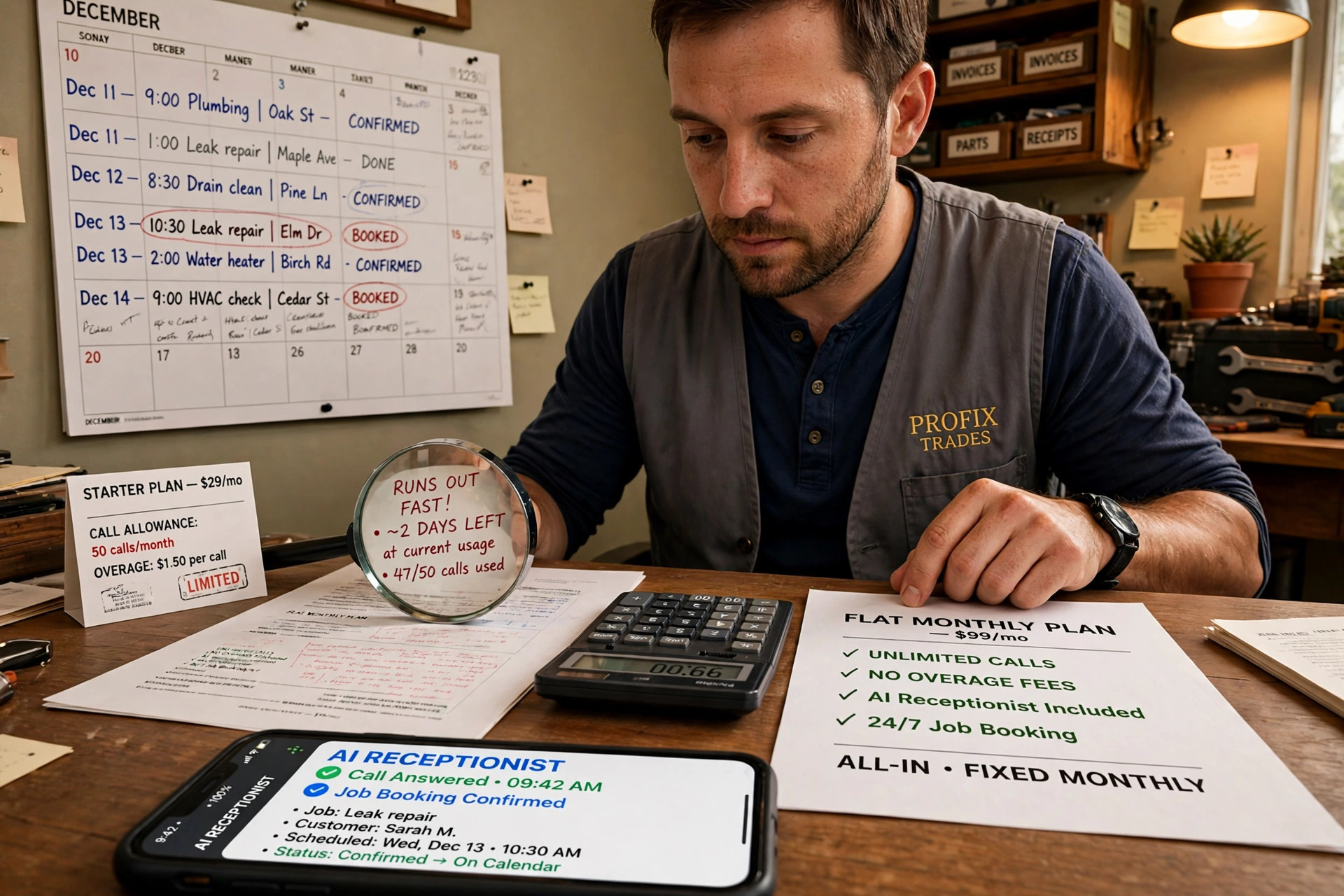
The lowest prices in this market buy the smallest allowances. On the published starter plans already broken down on our cost page, one widely sold plan is $24.95 for just 30 calls, and another is $29 for 60 minutes — a good week of real ringing can burn through either one before the month is half over. After the allowance, the meter starts: overage per call or per minute, at rates the headline never mentioned. A busy shop just defers the bill to the worst moment — the week the phone rings most, when those calls are worth the most. A low sticker with a small allowance is a starter sample, not a monthly plan.
What the published market actually charges
Put the stickers against ranges anyone can check. On prices read November 2, 2026, a live answering service runs $180–$1,160 for 100 calls a month, median $444 (NextPhone AI Receptionist Price Index), and metered AI plans run a median of $149 a month at 100 calls and $362 at 300 calls on the same index. A full-time in-house receptionist sits far above all of it, at roughly $3,170 a month in wages — before evenings and weekends. Timing widens the gap: ServiceTitan-reported figures put unanswered home-service calls at about 41% on weekends, Drift and Salesloft's 2024 report found about 39% of buyer conversations happen outside 9-to-5 hours, and CallRail's 2025 survey found 82% of consumers will call a competitor after a business doesn't answer. Your real ai receptionist cost is the bill plus the jobs that rang out.
How the call is counted changes the price
Two plans at the same monthly price can bill the same month very differently. Per-minute plans round a short call up to a full minute, so a month of quick triage calls — name, address, problem, booked — is priced as if every one ran long. Per-second counting charges for the seconds actually used. Then ask what the answer includes: does it greet callers in your business name, ask your questions, use AI that quotes jobs from your own rates, and complete the after-hours booking into your calendar — or take a message you still return in the morning? Spanish answering should be included without a per-call surcharge.
What a fair low price looks like — in print
Alice publishes its menu in advance, so the comparison is checkable. The office hub starts at Founding $49 a month. Alice Phone starts with a 7-day free trial with 10 calls included, then $11.99 a week for up to 20 calls a week, counted by the second and never rounded up. If a busy week rings past that, an optional More Calls tile adds 20 more calls a week for $9.99 a week — a tile you choose, not a meter behind your back. We do not claim the cheapest sticker; the starters above are cheaper on paper. The claim is narrower: allowance, counting, and price are printed before you sign up, and the answer ends in a booking.
Run your own numbers before you switch
Do not switch on a headline — ours or anyone's. Pull last month's phone record and run the free missed call audit: how many calls you actually got, how many rang out, and how many landed after hours or on weekends. Divide any plan's real monthly total by the calls it truly covers, then add the jobs the audit shows you missing. That is how a small shop can never miss a job that starts as a ringing phone, and book more jobs without paying receptionist wages to do it.