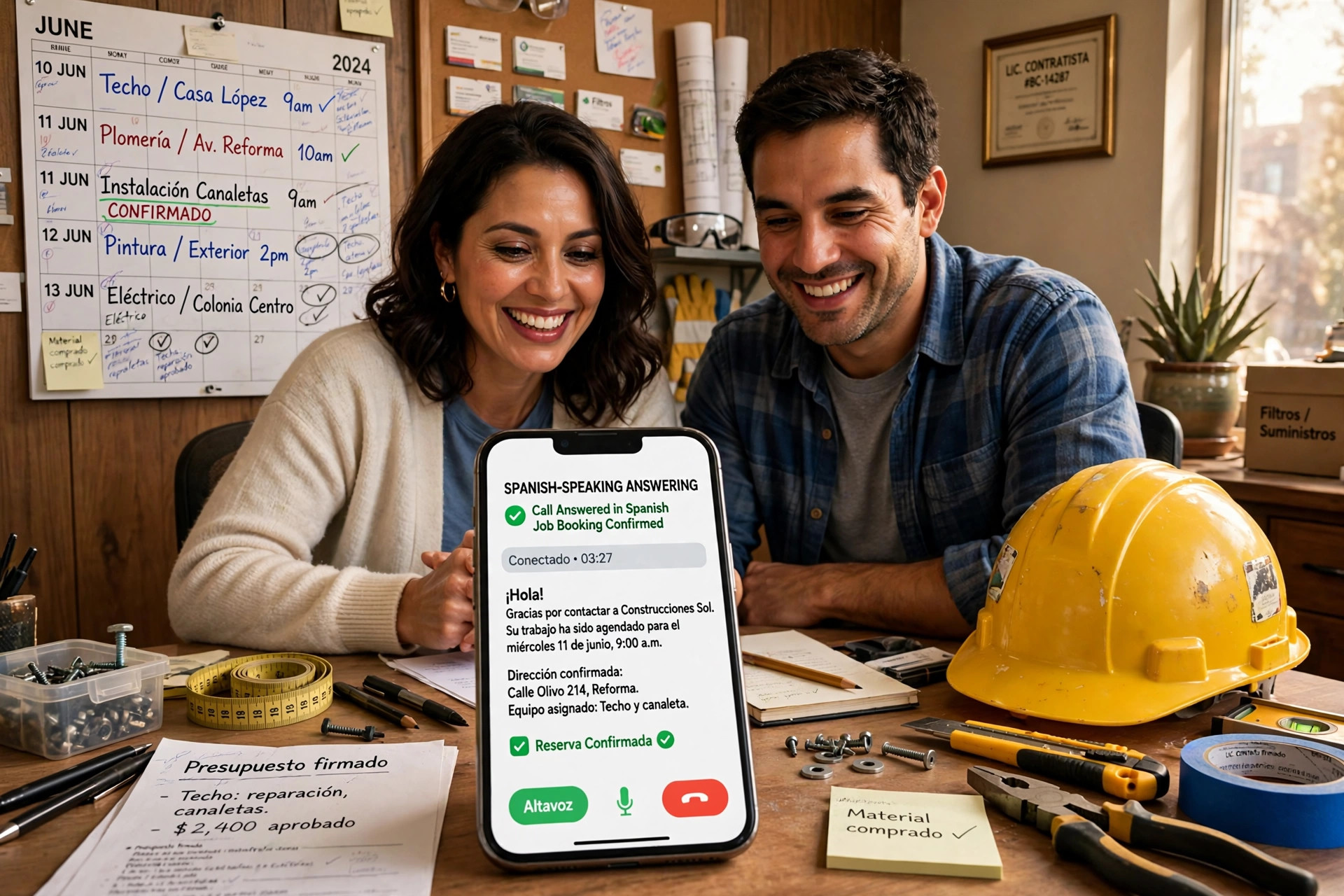
Spanish-speaking answering for contractors is the plain-English name for a simple wedge: a Spanish-speaking homeowner calls three shops about the same roof, pipe, or remodel. Two of them can't hold the conversation — a menu tree, a voicemail box, or an apologetic "no español." The third answers in Spanish, quotes the job, and books it on the same call. This edition explains, in English, why that third shop keeps winning customers its competitors never even get to quote.
The call your office never hears about
A customer who can't explain the problem in English doesn't usually leave a message and wait. They hang up and call the next name — and you never see the missed call as anything more than a number with no name attached. Run a missed call audit on last month's log and the pattern shows up fast: short calls, no message, no callback, in the evenings. Those aren't wrong numbers. A good share of them are buyers your office couldn't talk to.
It isn't office hours that decide it
Roughly 39% of buyer conversations happen outside the 9-to-5 window, according to Drift / Salesloft (2024), and 41% of weekend calls go unanswered in home services, according to figures reported by ServiceTitan. Spanish-speaking customers work the same long days your crews do — they call at night and on weekends, which is exactly when after-hours booking decides who gets the job. The 82% of consumers surveyed by CallRail in 2025 who said they'd call a competitor if a business doesn't answer don't make an exception because the first shop was busy; they just keep dialing, in Spanish, until somebody books them.
What "answering in Spanish" has to actually mean
A greeting in Spanish followed by an English conversation is not answering in Spanish. A real recepcionista virtual en español greets the caller with your business name, works out whether it's an emergency or an estimate, asks the trade questions in natural Spanish, quotes from your own rates, and confirms the booking — name, address, service, price, and arrival time — in the language the customer called in. That includes reservas 24/7 en español: the same full booking at 10 PM on a Sunday as at 10 AM on a Tuesday, with no menu maze and no "press two" detour.
The surcharge is the tell
Plenty of services will happily add Spanish — for more money, as if your customer's language were an upgrade package. Compare the published bands: live bilingual answering runs $499–$2,165 a month for 200 calls, and AI receptionists in Spanish run $149–$385 a month (customerexperience.io, rates reviewed September 2026). Live answering in general runs $180–$1,160 per 100 calls, median $444 (NextPhone AI Receptionist Price Index, read November 2, 2026), and a full-time receptionist costs about $3,170 a month in wages alone. Alice's position is printed on the pricing page: Spanish is included, at the same price, on every call — because the language your customer speaks is part of the job, not a line item.
What it costs here, in print
The Alice office hub starts with the Founding membership at $49 a month. Alice Phone starts with a 7-day free trial with 10 calls included; after the trial it's $11.99 a week for up to 20 calls a week, counted by the second and never rounded up to the minute, with an optional More Calls tile adding 20 more calls a week for $9.99 a week. English or Spanish, day or night — the rate doesn't change, and neither does the booking: answered, quoted, and on your calendar, so you never miss a job just because it arrived in the other language.
Check your own log first
Don't take any of this on faith — including ours. Pull last month's calls and count the ones that ended in under thirty seconds with no message and no return call, especially after hours. That count is the size of the market you're currently handing to whichever competitor answers in Spanish. The free audit does that math with you in about two minutes, with your own numbers, before you spend a cent.